Hyrox Calculator: Predict Your Race Time and Train Smarter

What Is the Hyrox Calculator and Why Does It Matter?
Hyrox races are demanding. You run eight 1km segments, and between each run you face a different functional fitness station. Finishing strong means balancing running endurance with station-specific strength and stamina.
That is where the Hyrox Calculator from GrabGains comes in. By entering your current fitness benchmarks, you get an estimated finish time and a breakdown of where you are fast, where you are slow, and where you have the most room to improve.
Instead of guessing your pacing strategy or hoping for the best, you can train with precision. The calculator turns scattered data into a clear picture of your race readiness.
How the Hyrox Calculator Works
The calculator asks for your best times or scores on each component of the race:
- Running pace: Your average 1km time
- Station times: How long each workout station takes you
You enter your numbers, and the tool estimates your total finish time. More importantly, it highlights which stations cost you the most time relative to competitive benchmarks.
This is not just about getting a number. It is about understanding your profile as a Hyrox athlete. Are you a strong runner who loses time on the sled? A wall ball machine who fades on the ski erg? The calculator reveals your patterns.
The 8 Hyrox Stations Explained
Every Hyrox race features eight workout stations. Training for all of them is essential, but you will likely find some easier than others. Here is a quick overview with links to detailed technique guides.
1. Ski-Erg (1000m)
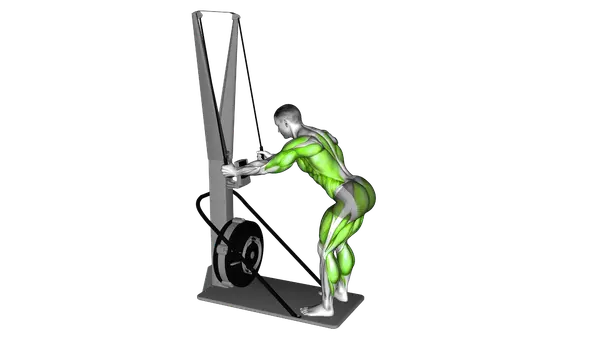
The Ski-Erg tests your upper body endurance and core stability. You pull down on the handles in a rhythmic motion, mimicking cross-country skiing. Pacing matters here. Start too fast and your arms will burn out before the run that follows.
2. Sled Push (50m)
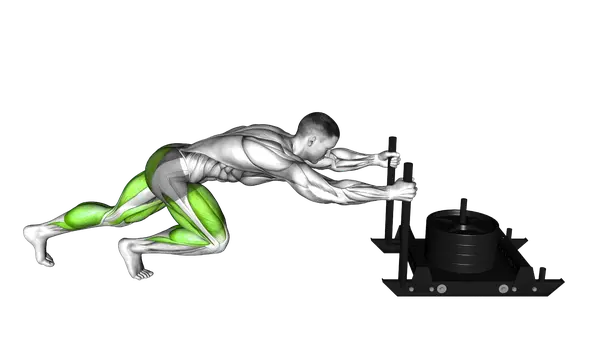
The Sled Push demands leg drive and mental grit. Lower your center of gravity, drive through your legs, and keep moving. Short, powerful steps work better than long strides.
3. Sled Pull (50m)
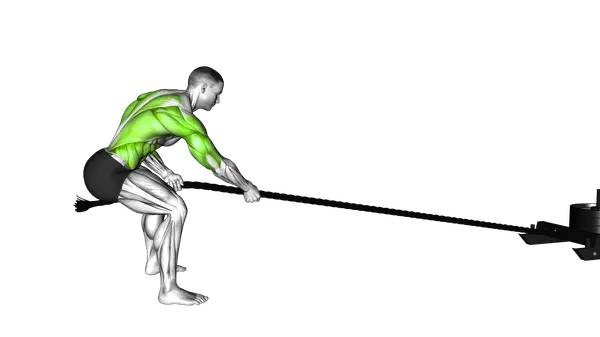
The Sled Pull taxes your grip, back, and biceps. You pull a weighted sled toward you using a rope. Hand-over-hand technique and steady breathing keep you efficient.
4. Burpee Broad Jumps (80m)

Burpee Broad Jumps combine explosive lower-body power with full-body conditioning. You drop into a burpee, then jump forward as far as possible. Rhythm and consistency beat all-out sprinting here.
5. Rowing (1000m)
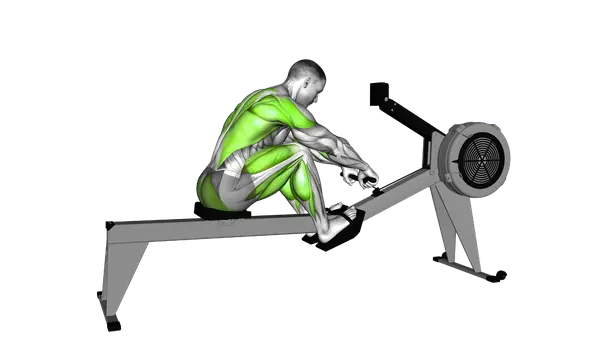
The Rowing Machine station challenges your legs, back, and lungs. A controlled stroke rate and strong leg drive will serve you better than frantic pulling. Aim to keep your split time steady from start to finish.
6. Farmers Carry (200m)

The Farmers Carry tests grip endurance and core stability under load. Walk with purpose, keep your shoulders back, and breathe steadily. Dropping the weights costs valuable seconds.
7. Sandbag Lunges (100m)

Sandbag Lunges burn your quads and glutes while challenging your balance. Keep the sandbag secure on your shoulder, step forward with control, and find a sustainable pace.
8. Wall Balls (100 reps)

Wall Balls demand leg power, shoulder endurance, and coordination. Squat deep, drive up explosively, and throw the ball to the target. Breaking sets into manageable chunks often beats going unbroken and burning out.
For a complete overview of all Hyrox movements, visit the Hyrox exercise hub.
Using Your Predicted Time to Train Smarter
Once you have your estimated finish time, the real work begins. Here is how to turn that number into a targeted training plan.
Identify Your Weak Stations
Look at where you lose the most time compared to your other stations. If your sled push time is significantly slower relative to benchmarks, that station deserves extra attention in training.
Prioritize High-Impact Improvements
Some stations have more room for improvement than others. A 30-second gain on the ski erg might be easier to achieve than shaving 30 seconds off an already fast row. Focus on the stations where effort converts to time savings.
Balance Running and Station Work
Many athletes neglect running because stations feel more exciting to train. But running connects everything. If your 1km splits are slow, you carry fatigue into each station. Build your aerobic base alongside station-specific drills.
Retest and Adjust
Every 4-6 weeks, retest your benchmarks and update the calculator. Watch your predicted time drop as your training takes effect. This feedback loop keeps you motivated and ensures your plan stays relevant.
Sample Training Week for Hyrox Preparation
Here is a simple framework for balancing running and station work:
Monday: Easy 5km run plus core work
Tuesday: Station practice (Ski-Erg intervals, Sled Push and Pull technique)
Wednesday: Tempo run (3-4km at race pace) plus Burpee Broad Jump practice
Thursday: Rest or light mobility
Friday: Station practice (Rowing intervals, Farmers Carry, Sandbag Lunges)
Saturday: Long run (8-10km easy) or full Hyrox simulation
Sunday: Rest
Adjust volume and intensity based on your current fitness and how far out you are from race day.
Common Mistakes When Preparing for Hyrox
1. Ignoring Transitions
The clock does not stop between stations. Practice moving quickly from one task to the next. Fumbling with equipment or standing around costs real time.
2. Going Too Hard Too Early
Starting the Ski-Erg or Row at maximum effort feels heroic until your legs give out on the next run. Practice pacing in training so race day feels controlled.
3. Skipping Strength Work
Stations like the Sled Push, Sled Pull, and Farmers Carry reward raw strength. Include squats, deadlifts, and loaded carries in your program to build the foundation these stations demand.
4. Neglecting Grip Training
Your grip connects you to the sled rope, the farmers carry handles, and the rowing handle. Weak grip means slower stations. Add dead hangs, farmers walks, and towel pull-ups to your routine.
Ready to Predict Your Hyrox Time?
Head to the GrabGains Hyrox Calculator, enter your current benchmarks, and see where you stand. Use that information to build a training plan that targets your weaknesses and plays to your strengths.
Whether you are chasing a personal best or preparing for your first race, knowing your numbers gives you the edge. Train smart, race hard, and watch your predicted time become your actual time.
Frequently Asked Questions
How accurate is a Hyrox time prediction calculator?
What fitness tests should I do before using the calculator?
How often should I retest my benchmarks?
Can beginners use a Hyrox calculator?
Related Articles

Smart Snack Strategy: High‑Protein Snacks For Lifters
Learn how to use high-protein snacks strategically to boost muscle growth, control hunger, and support metabolic health, without obsessively tracking every gram.

2-Day Strength Split For Busy Women In 2025
Pressed for time but still want to get stronger? Learn how to use a 2-day strength split to build muscle, boost energy, and stay consistent, even with a packed schedule.

NEAT Movement: The Simple Daily Habit To Stay Lean
Discover how NEAT movement (non‑exercise activity thermogenesis) can help you burn more calories, stay lean, and boost energy without long workouts or fancy equipment.
Enjoyed This Article?
Check out more fitness tips, workout guides, and nutrition advice on our blog.
Browse All Articles →